Showing posts with label Borges. Show all posts

Sunday, January 31, 2010

Thoughts on bifurcations, aka GROUNDHOG DAY!


Last week when we were discussing Borges's story "The Garden of Forking Paths," we talked about the idea of bifurcation, of a choice of paths where something goes one way or another. In Borges's imagined fictional form, all possibilities happen simultaneously, although in any given timeline, of course, only one possibility can manifest. Oh, I am thinking about Tuesday night's season premiere of Lost so very much here! And appreciated the New York Times interactive timeline of Lost with exec producers' audio discussion of time travel, all pertinent to our current inquiry into linear and nonlinear storytelling, which you can see here. More on all of this, soon, but I wanted to share this link now. And remember to watch the film Groundhog Day before Tuesday's class. The possible future in which we have not all seen it does not have as fantastic a class discussion in it as the one in which we all have :)

Thursday, January 28, 2010

The Garden of Forking Paths: Linear and Non-Linear Narrative


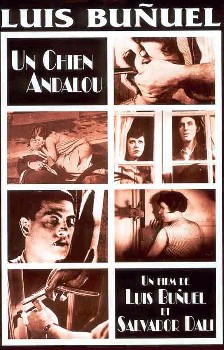
A story has a beginning, a middle, and an end, right? It starts in one place, and then continues, like a straight line. Our reading for today, "The Garden of the Forking Paths" by the great Argentine writer Jorge Luis Borges images something different. It was written in 1941, long before hyperlinks or even much experimentation with non linear film narrative (although the surrealist film made by Dali and Luis Bunuel Un Chien Andalou was released in 1929.)

We can talk about Borges' story as a spy story, and also as an experiment in narrative.

There are a lot of questions we can ask about the story, and an excellent page full of study questions is on Dr. Fidel Fajardo-Acosta's World Literature Website. But here is one question I have for you: The form of the story is still relatively linear, so what does it take to make a narrative that is non-linear? Think about Yu Tsun's experience in the story, how he relates it as a narrator, and what his ancestor Ts'ui PĂȘn's leaves behind. How do you imagine the labyrinth?

Also, let's talk about this blog, our wiki, and what it means to participate in a narrative with agency beyond reading it.