Showing posts with label gaming. Show all posts

Thursday, April 8, 2010

Where Gaming Meets Social Networking: Farmville and (hopefully) Beyond

Just read an article by Soren Johnson on Game Guide Reviews about Farmville, which concludes with this: "Obviously, developers are wary of how Facebook gaming will change the industry in the years ahead. (Compare the importance of business metrics now with 1997s Ultima Online, which lead designer Raph Koster points out wasnt designed around any business model in particular.) The irony is that Facebook games typically share four characteristics that really do promise great things for both gamers and designers: -True friends list: Gaming can now happen exclusively within the context of ones actual friends. Multiplayer games no longer suffer from the catch-22 of requiring friends to be fun while new players always start the game without friends. -Free-to-play business model: New players need not shell out $60 to join the crowd. Consumers dont like buying multiplayer games unless they know that their friends are all going to buy the game as well. Free-to-play removes that friction. -Persistent, asynchronous play: Finding time to play with ones real friends is difficult, especially for working, adult gamers. Asynchronous mechanics, however, let gamers play at their own pace and with their own friends, not strangers who happen to be online at the same time. -Metrics-based iteration: Retail games are developed in a vacuum, with designers working by gut instinct. Further, games get only one launch, a single chance to succeed. Most developers would love, instead, to iterate quickly on genuine, live feedback. These four pillars are the reason why many game developers are flocking to Facebook. (Of course, many of these characteristics are not exclusive to Facebook, but combining them together with such a large audience makes Facebook the obvious choice right now.) However, Jesse Schell is right; a war is brewing over who will call the shots. The question is not simply one of suits-vs-creatives. The question is will designers take the time to learn the business, to learn how to pay the bills while also delivering a fantastic game experience? As BioWares Ray Muzyka put it during a panel on connected gaming, ultimately all decisions are made with a goal to make money, but the goal may be short-term revenue (can we sell more blue hats tomorrow?) or long-term growth (does our community believe in what we are doing? are we creating life-long fans?). The successes will not come from open conflict between design and business but from developers who internalize the tension and attack the problem holistically. I have to admit my own reservations about this transformation; game design itself simply might be not as much fun as it used to be. I cannot easily sum up how enjoyable brainstorming a game is during the early, heady days of blue skies and distant deadlines. With a release-early-and-iterate mentality, these days are now over, for good. Games will no longer be a manifestation of an individuals (or a teams) pure imagination and, instead, will grow out of the murky grey area between developers and players. The designer-as-auteur ideal is perhaps incompatible with this model, but I believe the best game designers are the ones willing to get dirty to engage fully with a community to discover which ideas actually work and which ones were simply wishful thinking. Loss of control is never fun, but as Sid is fond of saying, the player should be the one having the fun, after all, not the designer."
Very interesting, those four characteristics. The idea that asynchronous play is appealing for one's real friends is a really important one, because a game can become the mode through which contact and shared experience can continue even if your lives make it hard to have synchronous computer-mediated quality time never mind face to face interactions. So building that into a game goes against so much of the MMO kind of thing, or the synchronous virtual world, where the social interactions are predicated on who is around at the same time.

Tuesday, March 30, 2010

On Jenkins's "Game Design as Narrative Architecture"

Henry Jenkins explores and goes beyond the split between "ludology" and "narratology" in what we focus on when we think about games. His distinctions between the kinds of stories that are told in games and the stories that make up games are helpful.

He uses the term "micronarrative" and the example of The Odessa Steps sequence from Battleship Potempkin:

Let's also discuss Jenkins's ideas of: emergent narratives and embedded narratives.

Wednesday, March 24, 2010

Thinking through Digital Narrative: Discussing Terms & Visualizing Concepts

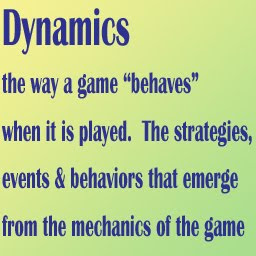
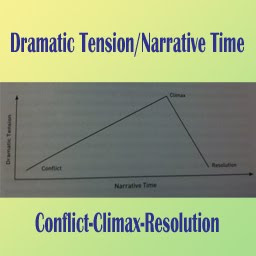
On Tuesday, we met in Second Life to discuss "Tools for Creating Dramatic Game Dynamics" by Marc LeBlanc, in a volcano. We'll start off Thursday's class with an assessment of that experience, of what it's like to have class in a virtual environment instead of the face-to-face, brick and mortar (or whatever that metal stuff is we have on the walls and ceiling that is supposed to be soundproofing) classroom. What difference do the avatars make? Is it better to be taught by a centaur? Worse? Makes surprisingly little difference? Is it like being on the phone? In a game? (stuck in a class in a game!!) Why or why not?

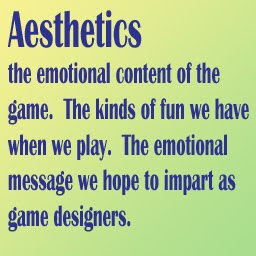
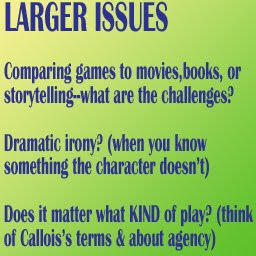
Here are some of the slides from our discussion, and we can pick up with the last one:


In today's reading, "Interaction & Narrative," Michael Mateas and Andrew Stern distinguish between STORY: "experiences that have a tightly organized plot arc, progression towards a climax, beginning, middle, and end, etc" and NARRATIVE: " the abstract properties or qualities of stories, and more loosely structured, 'experimental,' story-like experiences" (643 in The Game Design Reader). Are these helpful definitions and distinctions, and if so, why? Where do interaction and narrative intersect? See my previous blog post for how some of the television industry's smartest most innovative minds reacted when someone suggested that interaction would be more compelling some day than story.

Mateas and Stern write: "Where gameplay is all about interactivity, narrative is all about predestination" (643). They go on to explore ideas about interactive drama that seeks to combine the two, rather than accept them as antithetical. In developing their "Neo-Aristotelian Theory of Interactive Drama," they draw on Laurel, and Murray. Murray offers three categories for analyzing interactive story experience:

1) Immersion: the feeling of being present (or telepresent) someplace other than where you are physically, and connected to Coleridge's "willing suspension of disbelief"

2) Agency: I define agency as the ability to effect change in the world, or the game world. Murray explains that agency is connected to intention and not just to interface activity.

3) Transformation: as a) masquerade that allows the player to transform into someone else during the game; b) as variations on the theme that the player can explore and exhaust; and c) personal transformation as a journey on which the game experience takes the player.

They use Murray's terms to conclude: "a player will experience agency when material and formal constraints are balanced" (661).

So, for questions to get us started: how much narrative is there is in the games you like? Do you want to be involved in interactive drama? What about what the authors call the middle ground positions (see pp. 664-65)?

For Project 2, which is the plan/design, I am going to ask you to think of your project as both a story and a game. You'll only make one thing in the end, for Project 3, and you can blend it up any way you want, as long as you have an understanding of how much interactivity, how much story, how much agency, immersion, point of view, self-design, and social interaction is involved in your digital narrative.

I still think gaming is very closely related to story, although I am rethinking why that is. I am curious to hear if and why you think they are connected, and whether Digital Narrative is a good umbrella term for what we are doing in here this semester.

Last and not least, I want to raise the question of how to visualize some of the concepts we have been talking about in a 3-d model I want to build in Second Life that our avatars can be immersed in, maybe even interact with. Here is one kind of model, that takes a taxonomy of teaching objectives and makes it into a 3d pyramid kind of think you can walk (or trot as the case may be) around on, and get definitions of each term in local chat as you do. It is above the EduGolf course on L1's land in Boga: http://slurl.com/secondlife/Boga/179/40/59 That slurl will put you on the "experiment" square.


Any ideas for immersive diagrams? What concepts are the most important ones? I am leaning towards Caillois, but maybe you have other priorities?

Thursday, March 11, 2010

Defining Play & Games: Caillois

Agon, Alea, Mimicry, Ilinx: these categories of games that Roger Caillois isolate different aspects of play as they are codified into games.

Caillois defines Paidia as the "spontaneous manifestation of the play instinct" that leads to turbulence and disturbance. Ludus is the "taste for gratuitous difficulty" (141).

Let's apply these terms--and check back to Caillois's revision of Huizinga's definition of play (see below, p. 128) as we discuss your excellent analyses of the games you play and of some that we play together.

Thursday, January 28, 2010

The Garden of Forking Paths: Linear and Non-Linear Narrative


A story has a beginning, a middle, and an end, right? It starts in one place, and then continues, like a straight line. Our reading for today, "The Garden of the Forking Paths" by the great Argentine writer Jorge Luis Borges images something different. It was written in 1941, long before hyperlinks or even much experimentation with non linear film narrative (although the surrealist film made by Dali and Luis Bunuel Un Chien Andalou was released in 1929.)

We can talk about Borges' story as a spy story, and also as an experiment in narrative.

There are a lot of questions we can ask about the story, and an excellent page full of study questions is on Dr. Fidel Fajardo-Acosta's World Literature Website. But here is one question I have for you: The form of the story is still relatively linear, so what does it take to make a narrative that is non-linear? Think about Yu Tsun's experience in the story, how he relates it as a narrator, and what his ancestor Ts'ui PĂȘn's leaves behind. How do you imagine the labyrinth?

Also, let's talk about this blog, our wiki, and what it means to participate in a narrative with agency beyond reading it.

Wednesday, January 20, 2010

STORYTELLING IN THE DIGITAL AGE, & before

Reading across the media sustains a depth of experience that motivates more consumption. In a world with many media options, consumers are choosing to invest deeply in a limited number of franchises rather than dip shallowly into a larger number. Increasingly, gamers spend most of their time and money within a single genre, often a single franchise. We can see the same pattern in other media-films (high success for certain franchises, overall declines in revenue), television (shorter spans for most series, longer runs for a few), or comics (incredibly long runs for a limited number of superhero icons). Redundancy between media burns up fan interest and causes franchises to fail. Offering new levels of insight and experience refreshes the franchise and sustains consumer loyalty. Such a multilayered approach to storytelling will enable a more complex, more sophisticated, more rewarding mode of narrative to emerge within the constraints of commercial entertainment.

--Henry Jenkins, "Transmedia Storytelling"

Jenkins' talk on 7 Principles of Transmedia Storytelling at Futures of Entertainment 4 conference Nov 09

And here they are:

1. Spreadability vs. Drillability
2. Continuity vs. Multiplicity
3. Immersion vs. Extractability
4. Worldbuilding
5. Seriality
6. Subjectivity
7. Performance


One example I have done research on is "IT," which was a concept that Elinor Glyn, kind of an Oprah of the 1920s, but a Canadian in a tiara, first developed in her writing to describe the quality of sexual magnetism. Then she wrote a novella, published in two parts in the magazine Cosmopolitan (then more of a fiction magazine than what it is now), which the characters in the silent film It read and discuss, even to the point of asking her about what she meant when she sweeps into a scene in a cameo appearance. Clara Bow, the star of that film, was marketed as "the It girl," a phrase we still use today. "IT," the perfect meme, really, made the transmedia rounds of the Jazz Age.


It is really a fairy tale, and that brings us to our next topic--Propp and the way he analyzed the pieces of folktales in his Morphology. After studying a body of tales, he claimed that all tales really share the same structure, with variations in the functions employed. Here is a clever Fairy Tale generator based on Propp's functions. Let's give it a spin!

and here is an article about how Propp relates to narrative in games.